Perditësimi i fundit September 17th, 2026 8:24 AM

Abstracts no. 41
Islamic Studies
- Muhammad (p.b.u.h.): The Most Influential Leader in the Guidance of Humanity
Prof. Dr. Qazim Qazimi
Abstract
This paper examines the figure of Prophet Muhammad (p.b.u.h.) as the most influential personality in human history, analyzing his religious, political, and social dimensions through the lens of divine sources and historical tradition. The study begins with the Quranic argumentation and biblical prophecies regarding his advent, continuing with the miracles that accompanied his birth and the development of his moral character (al-Amin) prior to his prophethood.
A significant focus is dedicated to the phenomenon of Mawlid (the anniversary of his birth), analyzing it as a socio-cultural and literary event. The research explores the origins of Mawlid celebrations in the Islamic world and their transformation into a rich artistic tradition, particularly within Albanian territories. By analyzing the contributions of poets and scholars such as Hasan Zyko Kamberi, Tahir Popova, and Hafiz Ali Korça, the paper highlights how this literary heritage served not only as an act of devotion but also as a powerful tool for preserving the national, linguistic, and cultural identity of Albanians against the risks of assimilation.
In conclusion, the paper argues that the observance of Mawlid, viewed as a “praiseworthy innovation” (bid’atun haseneh), remains an essential element of Islamic collective memory. It promotes universal values of peace, coexistence, and reverence for the prophetic figure in the contemporary era.
Keywords: Muhammad (p.b.u.h.), Mawlid, Aljamiado Literature, National Identity, Coexistence, Bid’atun Haseneh.
2. Islamic Studies
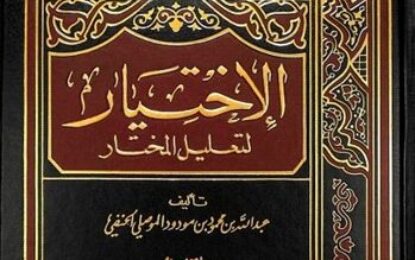
a) The Scientific and Pedagogical Value of the Work “Al-Ikhtiyar li-Ta’lil al-Mukhtar” in the Teaching of Islamic Jurisprudence (Fiqh)
Prof. Dr. Abdulxhemil Nesimi
Abstract
This paper explores the profound scientific and pedagogical significance of Imam Abdullah ibn Mahmud al-Mawsili’s (d. 683 AH) seminal work, “Al-Ikhtiyar li-Ta’lil al-Mukhtar”, within the framework of Hanafi jurisprudence. As a cornerstone of Sharia sciences, this work is distinguished by its unique methodology that transcends the mere listing of legal rulings (fatawa) by providing rigorous legal reasoning (ta’lil) and evidentiary support (dalil).
The study analyzes the reception of “Al-Ikhtiyar” by both classical and contemporary scholars, highlighting its role as an authoritative reference in major Islamic institutions such as Al-Azhar University and various faculties across Turkey, Syria, Iraq, and the Balkans. The author examines al-Mawsili’s balanced approach between tradition (naql) and reason (‘aql), which facilitates the development of a systematic legal mindset in students. Furthermore, the paper discusses the historical impact of this work on the Albanian academic and judicial landscape during and after the Ottoman era.
In the contemporary context, the paper argues for the urgent necessity of integrating this work into modern university curricula. By bridging theoretical jurisprudence with practical application and the higher objectives of Sharia (Maqasid al-Shari’ah), “Al-Ikhtiyar” provides a robust framework for addressing modern legal challenges. The paper concludes by emphasizing that the recent translation of this work into the Albanian language serves as a vital scientific bridge, preserving Islamic scholarly heritage while enhancing contemporary legal awareness and the issuance of fatwas in the region.
Keywords: Al-Ikhtiyar, Al-Mawsili, Hanafi Fiqh, Legal Reasoning (Ta’lil), Islamic Pedagogy, Sharia Sciences, Albanian Islamic Heritage.
b) Taʿlil and the Ethics of Responsibility: A Rereading of Al-Ikhtiyar li-Taʿlil al-Mukhtar as a Bridge Between Text and Context
Ph.D. Anja Gjeci
Abstract
This paper aims to reposition the methodological and ethical significance of “Al-Ikhtiyar li-Taʿlil al-Mukhtar” by al-Mawsili (d. 683/1284), a seminal text in Hanafi jurisprudence. The central focus of the analysis is the practice of taʿlil (the rational justification of legal rulings), which transforms the work from a simple normative manual into an active platform for interpretation. The study argues that al-Mawsili, by elucidating the effective causes (ʿilal) behind each rule, places the ethical and epistemic responsibility of the jurist at the heart of the legal process.
The paper further analyzes the work’s didactic structure, emphasizing how this model of reasoning serves as a bridge between fidelity to the divine text and responsiveness to social reality. Through this approach, the student of fiqh does not merely learn mechanical rules (“the what”), but internalizes the intentional and transparent logic of the law (“the why”).
In conclusion, the abstract explores the contemporary relevance of this model, proposing that al-Mawsili’s ethos should be viewed not as a tool for ready-made solutions, but as a paradigm for addressing today’s ethical challenges. The paper concludes that rereading this tradition offers a necessary continuity between classical heritage and the needs of modern interpretation within Islamic thought.
Keywords: taʿlil, text-context mediation, ethical responsibility of interpretation, Hanafi methodology, al-Mawsili.
c) The Methodology of Legal Reasoning in the Work “Al-Ikhtiyar li-Ta’lil al-Mukhtar”
Eduart Shefkiu
Abstract
This paper analyzes the monumental work “Al-Ikhtiyar li-Ta’lil al-Mukhtar” by Imam al-Mawsili, a central manual of Hanafi jurisprudence that served as a cornerstone for the standardization of Islamic legal practices. The study examines the author’s unique methodology, which does not merely present legal rulings (matn) but accompanies them with rigorous legal reasoning and evidentiary support derived from the Quran, Sunnah, Ijma (consensus), and Qiyas (analogy).
A special focus is placed on the distinction between the chapters of worship (ibadat) and contractual relations (muamalat). While the norms of worship are treated as static, the paper highlights the flexibility and dynamism of muamalat, arguing how “Al-Ikhtiyar” remains relevant through principles that adapt to various socio-economic contexts. Furthermore, it analyzes the significance of legal motivation (ta’lil) as a tool that enables the extension of religious rulings from foundational cases to the dynamic events of daily life.
The study also explores the complex legal terminology utilized by Imam al-Mawsili and the influence of Usul al-Fiqh (Principles of Jurisprudence) in structuring the work. In conclusion, it is emphasized that “Al-Ikhtiyar” is not merely a historical manual but a pedagogical instrument that develops the contemporary jurist’s ability to think legally and provide solutions within the framework of Sharia.
Keywords: Al-Ikhtiyar, Imam al-Mawsili, Hanafi Fiqh, Ta’lil (Reasoning), Muamalat, Usul al-Fiqh, Qiyas.
History
- Religious Organization in the Liberated Territories (1941–1944)
Phd.c Jeton Idrizi
Abstract
This paper examines the process of administrative and institutional reorganization of the Albanian Muslim Community during World War II, with a specific focus on the “Liberated Territories” (Kosovo and Western Macedonia). The research highlights the transition of jurisdictional powers from the Ulema Majlis of Skopje to the Presidency of the Muslim Community in Tirana, marking a decisive step toward the institutional unification of Albanians on both national and religious grounds.
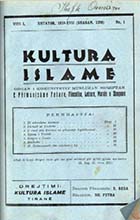
Through the analysis of archival documents and historical references, the article details the structuring of Chief Muftis’ offices in Prizren and Pristina, the significant role of the magazine “Kultura Islame” in cultivating morality and patriotism, and the importance of the Madrasas of Gjakova as centers for education in the Albanian language. Particular attention is given to the Congress of the Muslim Clergy in Prizren (1941) and the hierarchical shifts under the Italian administration (Jacomoni), which culminated in the appointment of Hafiz Sherif Langu as the head of the community.
The study concludes that, during this period, religious institutions played a primary role in overcoming historical divisions and strengthening national consciousness. The new organization proved that for the Albanian population, the sense of nationality remained paramount, transforming religious harmony into an effective tool for the political and spiritual unification of the country.
Keywords: Liberated Territories, Albanian Muslim Community, National Unification, Council of Ulema, Congress of Prizren, Hafiz Sherif Langu, History of Kosovo.
Philosophy
- Liberty and Democracy Cannot Be Realized Without a Moral and Intellectual Renewal
Prof. Dr. Gjergj Sinani
Abstract
This article explores the critical necessity of spiritual and intellectual renewal as a fundamental prerequisite for the establishment of a functional democracy and the preservation of liberty in post-totalitarian Albania. Drawing upon the philosophical insights of Edmund Husserl, Friedrich Nietzsche, Hannah Arendt, and specifically the Albanian philosopher Isuf Luzaj, the author argues that political reforms, constitutional changes, and legal frameworks are insufficient if they lack a supporting moral infrastructure.
The text identifies several pathological symptoms in contemporary society, including:
- The “Barbary of Opinion”: A transition from state-enforced silence to a chaos of uninformed opinions and mediocrity.
- “Chameleonism” and Opportunism: The proliferation of individuals who adapt superficially to power structures without genuine ethical evolution.
- Intellectual Apathy: A societal focus on material comfort and physical pleasures at the expense of spiritual elevation and critical thinking.
Central to the analysis is the work of Isuf Luzaj, “The Reconstruction of Spiritual Powers.” Prof. Sinani emphasizes Luzaj’s message to the youth of the 21st century, urging them to abandon servility toward political leaders and to embrace “manly character,” dignity, and the pursuit of truth. The article concludes that justice and solidarity are not mere bureaucratic outcomes but results of a living morality. Without a profound “cleansing of the soul” from the remnants of totalitarism and the rejection of intellectual laziness, the transition to a Western-style civilization remains an incomplete illusion.
Keywords: Moral Renewal, Intellectual Apathy, Post-Totalitarianism, Isuf Luzaj, Albanian Philosophy, Democracy, Liberty, Justice.
Secularism and Religious Freedom
- Religious Presence and Believers’ Rights in a Secular State: The Muslim Majority and Selective Neutrality in Albania
Myzejen Myftari
Abstract
This paper undertakes a critical analysis of the implementation of the principle of laicity (secularism) in contemporary Albania, focusing on what the author terms as “selective neutrality.” Although the Constitution of the Republic of Albania (Article 10) sanctions a pluralistic and neutral model of laicity, institutional practices and public discourse often witness an asymmetric approach toward the Muslim community—the country’s demographic majority and a historical pillar of its national and cultural identity.
The article argues that instead of serving as a tool for protecting religious freedom and pluralism (following the liberal traditions of Rawls and Kymlicka), laicity is being instrumentalized as a mechanism for cultural control and the “re-education” of Islamic identity. The author analyzes how outdated models of aggressive secularism, which aim to purge the public square of religious elements, are resurfacing through bureaucratic hurdles, media stigmatization, and prejudices against religious symbols such as the hijab or the Adhan (call to prayer).
The study explores three problematic dimensions in depth:
- The Legal Aspect: The conflict between international standards (ECHR) and arbitrary local interpretations that restrict religious expression in the name of a misunderstood “neutrality.”
- The Sociological Aspect: The role of religion as a producer of social capital and cohesion, noting that the marginalization of public Islam damages civic solidarity and fosters “internal Orientalism.”
- The Psychological Aspect: The consequences of stigmatization on the identity of believers, which often translate into feelings of exclusion and identity anxiety.
In conclusion, the article proposes a reconceptualization of Albanian laicity—not as a process of “cleansing” religion from public life, but as a guarantee for equal coexistence. The author emphasizes that religious tolerance in Albania is not a product of state-imposed secularism, but rather a result of the centuries-old culture of the Muslim community and other faith groups. Therefore, protecting this heritage requires a state that respects the right of every citizen to be present and equal within the public sphere.
Keywords: Laicity, selective neutrality, Muslim community, public space, pluralism, religious freedom, national identity.
Science & Religion
- The Invisible Universe of the Cell between Science and the Quran
Hasan Domi
Abstract
This article offers an analytical and reflective look at the cell as the fundamental unit of life, harmonizing the latest discoveries of medical technology with the profound insights of Quranic revelation. The text begins by referencing a groundbreaking microscopic image recently published by Italian scientists—regarded as the most detailed view of a human cell to date—to argue that modern science is uncovering today what the Quran identified centuries ago as “signs within yourselves” (Surah 51:21).
Through a narrative that weaves together biology and professional gratitude, the author honors prominent figures of Albanian pedagogy, such as Robert Papajani and Aleko Xoxe, who laid the foundations of scientific knowledge regarding the mysterious world of the cell within Albanian auditoriums. The paper details the astonishing complexity of organic systems, with a specific focus on the brain and the heart. The latter is treated not merely as a mechanical pump but as a cognitive center, aligning with the Quranic concept of the “heart that reasons.”
A key aspect of the work is the analysis of cellular regeneration—noting that 98% of the human body is rebuilt within a year—and the ability of DNA to store vast amounts of information. The author links these biological phenomena to the eschatological testimony of the limbs on the Day of Judgment, as described in sacred texts. The article concludes that the perfection of human biological design serves as the clearest evidence of divine craftsmanship, inviting the reader toward a deep reflection on knowledge, existence, and faith.
Keywords: Cell Biology, Science and Religion, Quran, Cellular Regeneration, Neuroscience, Divine Design, DNA.
Ecology
- Environmental Protection in the Light of the Quran and Sunnah
Resul ef. Rexhepi
Abstract
This study examines the contemporary ecological crisis through the lens of Islamic primary sources—the Quran and the Sunnah—arguing that environmental protection is not merely a legal or social obligation but a profound theological imperative. Central to this discourse is the Islamic concept of “Succession” (Khilafah), which designates humanity as the trustee (muddabir) of the Earth, entrusted with the Amanah (sacred trust) of preserving the natural balance.
The author analyzes how Islamic Law (Sharia) prohibits the unnecessary destruction of nature, the killing of animals for sport, and the intentional burning of land, classifying such acts as violations of the divine order. The paper highlights that every created being—from the smallest insect to the vastest forest—is a sign (Ayah) of the Creator’s majesty and is engaged in a form of perpetual worship (Tasbih) that humans must respect.
A significant portion of the article is dedicated to the historical Islamic legacy of environmental sustainability, specifically the systems of protected zones known as Hima and Harem, and the unique institution of Waqf (endowments) dedicated to animal welfare. These models are presented as pioneering examples of ecological conservation that predate modern environmental movements.
In conclusion, the study asserts that resolving the environmental crisis requires a spiritual renewal. Practices such as afforestation, water conservation, and maintaining cleanliness are defined as high forms of worship known as Sadaqah Jariyah (ongoing charity). The author calls upon Muslim intellectuals and believers to lead the effort in nature conservation as a fundamental responsibility toward future generations and the Creator.
Keywords: Ecology, Quran, Sunnah, Environment, Animals, Waqf, Sadaqah Jariyah, Nature Protection, Khilafah.
Communication Science
- Review of the book “With God Among People” by Dorian Demetja: A Reflection on Spiritual Ethics and Social Responsibility
Prof. Asoc. Dr. Rahim Ombashi
This review explores the literary and theological contributions of Dorian Demetja in his work, “Me Zotin mes njerëzve” (With God Among People). Moving beyond his administrative role at the Muslim Community of Albania, Demetja emerges as a dedicated scholar of Islamic literature and spiritual ethics. The book is a collection of essays and reflections that bridges the gap between divine devotion and contemporary social life, advocating for a faith that is active, humanist, and deeply integrated into daily interactions.
Prof. Ombashi highlights the author’s methodological approach, which favors an essayistic and reflective discourse over rigid dogmatism. This allows for a multi-disciplinary dialogue involving theology, moral philosophy, and sociology. Key themes include the Quranic principle of Tawhid (the unity of God), the necessity of spiritual and moral education, and the rejection of modern loneliness through a sincere relationship with the Creator. Demetja posits that true faith is not a formal declaration or an isolated ritual, but a continuous process reflected in justice, mercy, and solidarity toward others.
Ultimately, the review characterizes the book as an essential bridge between modern life’s demands and the internal need for spiritual tranquility. It serves as a call for “active faith”—encouraging readers to seek the presence of God not through withdrawal from the world, but through ethical excellence and service within it.
Keywords: Islamic Literature, Spiritual Ethics, Social Responsibility, Modernity and FaithQuranic Reflection, Albanian Islamic Thought.


Artikuj të ngjashëm
Me shumë në këtë kategori



Aktivitete



Studime

Gjuhë-letërsi



Sociologji


1923 – 1939

1939 – 1945
Zani i Naltë (40)