Perditësimi i fundit September 17th, 2026 8:24 AM

Abstracts no. 42
Abstracts in English no. 42
- Islamic Sciences
The Concept of God in the Abrahamic Religions
Msc. Armand Asllani
Abstract
This study aims to shed light on how God is understood within three of the world’s greatest religious traditions: Judaism, Christianity, and Islam. Although separated by history and doctrine, these religions share a common origin and preserve a central idea: belief in one God who is single, omnipotent, and the creator of the universe. However, the manner in which this God is conceived differs across traditions. Judaism describes Him as incomprehensible to the human mind, yet always near to His people. Christianity presents God as a being encompassing profound love and mercy, incarnate in Jesus, while Islam firmly emphasizes His absolute oneness and majesty, excluding any form of resemblance to created beings. This comparison helps us understand not only the similarities that unite these religions, but also the distinctive features that characterize each and grant them a unique identity in their conception of the divine.
Keywords: Monotheism, Judaism, Christianity, Islam, Comparative Theology
2. Islamic Studies
a) “Al-Ikhtiyar” in Hanafi Fiqh: A Reflection of the Spirit of the School and the Diversity of Its Currents
A Comparative Analytical Study Between Authenticity and Contemporaneity
Dr. Jamal Alsafarti
Abstract
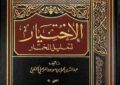
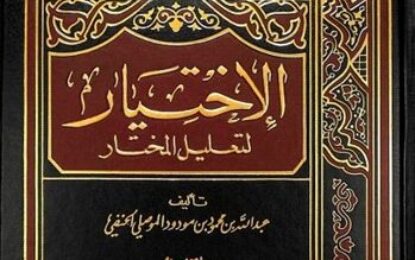
Hanafi fiqh constitutes one of the fundamental pillars of Islamic jurisprudence, distinguished by its balanced methodology and flexibility in deriving legal rulings, which has contributed to its spread across wide regions of the Islamic world, particularly in India, the Balkans, Turkey, and Iraq. Among the works that have played a foundational role within this school of thought, the book “al-Ikhtiyar li Ta’lil al-Mukhtar” by Imam Abdullah b. Mahmud al-Mawsili (d. 683 AH) stands out, owing to its precise presentation, judicious selection, and reasoned balancing among juristic opinions.
This study aims to analyze the significance of al-Ikhtiyar within Hanafi fiqh from a methodological perspective, comparing it with several other texts such as Bada’i’ al-Sana’i’, al-Hidayah, and al-Mabsut, while also highlighting the scholarly value of the book in the dissemination and teaching of the school in contemporary times, so as to preserve a balance between tradition and the demands of the present age.
Keywords: Hanafi fiqh, al-Ikhtiyar li Ta’lil al-Mukhtar, Abdullah b. Mahmud al-Mawsili, Islamic jurisprudence, Hanafi school, methodology of fiqh
b) Legal Maxims and Their Application in al-Mawsili’s “al-Ikhtiyar”
Dr. Elton Karaj
Abstract
Islamic law aims to regulate the life of Muslims both on an individual and a societal level. Within this legal system, one element of particular importance is legal maxims (qawa’id al-fiqh), which subsume secondary issues under general principles. These maxims serve to understand and address similar cases within a shared logical framework. In this way, they make a valuable contribution, both theoretically and practically, to the correct understanding of Islamic jurisprudence. This presentation will first clarify the basic definitions of legal maxims, along with their characteristics and sources. It will then provide several examples drawn from al-Mawsili’s work al-Ikhtiyar li Ta’lil al-Mukhtar.
Keywords: Legal maxims, Islamic jurisprudence, al-Ikhtiyar li Ta’lil al-Mukhtar, al-Mawsili, Hanafi fiqh, Islamic law
c) al-Ikhtijar li Ta’lil el-Muhtar: A Cornerstone of Hanafi Jurisprudence
Dr. Ejup Haziri
Abstract
This article examines al-Ikhtijar li Ta’lil al-Muhtar, a canonical Hanafi commentary on El-Muhtar lil-Fetwa, tracing its place within the historical evolution of Hanafi jurisprudence from its classical formulation through Ottoman institutionalization to 19th-century codification in the Majallat al-Ahkam al-Adliyya. It highlights the text’s practical role in Ottoman judicial training and şer’iyye court records, alongside al-Hidaya, and its documented use among Balkan Muslim communities in matters of property, waqf, family law, and inheritance. Five features are proposed as central to the work’s significance: its method of legal reasoning (ta’lil), comparative treatment of Hanafi authorities, balanced style between summary and analysis, influence on later scholarship, and role in preserving Hanafi legal heritage. The article advocates for an Albanian translation as a meaningful contribution to Islamic scholarship in the Albanian context.
Keywords: Hanafi jurisprudence, al-Ikhtiyar li Ta’lil al-Mukhtar; Ottoman judicial system, Balkan Islamic law, legal reasoning (ta’lil), Albanian translation of Islamic texts
d) Al-Ihtijar, as a Guiding Source for Islamic Legal Decision-Making
Bledar Myftari
Abstract
This article explores al-Ihtijar li Ta’lil al-Mukhtar by Imam Abdullah al-Mawsili (d. 683 AH) as a guiding methodological source for Islamic legal decision-making. The study situates the work within the broader concept of ikhtiyar — the selection of the soundest and most well-argued legal opinion — tracing its linguistic, theological, and juristic dimensions, from its Qur’anic roots to its technical application within Hanafi jurisprudence. It outlines the intellectual chain of transmission from the Prophet Muhammad through Ibrahim al-Nakha’i and Hammad ibn Sulayman to Imam Abu Hanifa and his principal students, situating al-Mawsili’s commentary within the tradition of the four foundational Hanafi texts (mutūn). The article examines the theological dimension of ikhtiyar as human free choice reconciled with divine omnipotence through the Sunni concept of kasb (acquisition), and its educational and judicial role across centuries, including its continued place in the curricula of al-Azhar. Finally, drawing on al-Mawsili’s example, the study reflects on the meaning of authentic Islamic renewal (tajdid) as continuity with, rather than departure from, foundational methodology, and argues that an Albanian translation of the work would represent a strategic step toward strengthening responsible fatwa culture and serious fiqh scholarship among Albanian-speaking Muslims.
Keywords: Ikhtiyar (legal selection/preference), Hanafi legal methodology, Free will and human responsibility (kasb), Ijtihad and juristic reasoning, Islamic renewal (tajdid)
- History
Islamic Memory in Albania in the 20th Century: Interruption, Silence, and Renewal
Fatma Karaj
Abstract
This paper addresses one of the most complex chapters of modern Albanian history: the violent interruption of Islamic religious life during the communist regime and its long-term consequences for collective memory and social identity. Through a historical and institutional analysis, the study aims to shed light on the process by which the Islamic faith—rooted for centuries in the spiritual, educational, and communal life of Albanians—was marginalized, suppressed, and ultimately banned by an ideologically atheist state.
The motivation for this paper stems from the need to understand not only the political and legal mechanisms of religious persecution, but also the cultural and psychological consequences produced by this policy in Albanian society. The interruption of the intergenerational transmission of the Islamic tradition, the destruction of religious institutions, and the imposed silence on faith created a deep void in historical memory, the consequences of which remain visible even today.
The paper is built upon various historical, legal, and scholarly sources, including academic analyses. The methodological approach seeks a critical reading of the relationship between the state and religion, situating the Albanian case within the broader context of anti-religious policies in the totalitarian systems of the 20th century.
Within this framework, the study aims not only to reconstruct the past, but also to encourage reflection on the importance of historical memory. The revival of religious life after 1990 is viewed here not merely as an institutional return, but as a complex process of reconstructing a tradition violently interrupted for several decades.
Keywords: Islam in Albania, communist regime, religious persecution, atheist state, religious revival
- Psychology
Man, and Islamic Thought
Prof. Dr. Muhamed Mustafi Faculty of Islamic Sciences, Skopje, North Macedonia
Abstract
Thought is the primary factor that distinguishes man from the non-human world of living beings, and for this reason, it is no coincidence that Almighty God attaches great importance to this matter.
A person who thinks according to divine principles will progress in every aspect of life, because throughout his entire life he will be preoccupied with the fact that he is, at every moment, under the control of Almighty God.
Man cannot have sound thoughts unless he delves deeply into himself and into nature, because the Muslim receives instructional lessons from his Creator and carries out the principles which he has been commanded to follow.
Islam is a religion revealed by Almighty God, and if man seeks other principles that contradict divine revelation, then he will not enjoy the authority he deserves, because he will not feel within himself responsibility toward his Creator, but only toward the creation—whereas the creation can in no way be more perfect than the Creator.
Man organizes an ideal life if the originality of the Islamic spirit prevails in his thoughts, and if he thinks within the framework of principles that do not contradict human nature and instinct; otherwise, individual, social, and natural chaos would form, just as we observe today throughout the world.
Keywords: Islam, man, faith, thought, history of thought, Islamic thought
- Cultural Heritage
Islamic cultural heritage in Europe with Arabic script: Position of a problem and a view Abstract:
This article explores the rich yet under-researched heritage of Islamic culture in Europe, focusing specifically on documents produced using the Arabic script. The author, Bogusław R. Zagorski, argues that European history remains incomplete without the integration of these sources, which have often been marginalized as “alien” or suppressed by past political regimes and censorship.
The study categorizes the historical sources into two primary groups:
- External Sources: Writings in Arabic, Persian, and Turkic languages that describe Europe from the perspective of Muslim travelers, geographers, and historians (dating from the 7th century onwards).
- Internal Sources: Documents created within Europe, subdivided by geographical and historical regions:
- Al-Andalus and Sicily: Literary texts and inscriptions, including the Spanish Aljamiado phenomenon.
- The Tatar World (Volga, Crimea, Lithuania): A unique tradition where Slavic languages (Polish, Belarusian) were written in Arabic script, serving as invaluable linguistic evidence of local dialects.
- The Ottoman State (The Balkans): Extensive administrative, religious, and cartographic documentation, with a focus on Albanian and Bosnian Aljamiado literatures.
The article highlights the significance of Aljamiado as a cross-cultural phenomenon arising under diverse political circumstances—from Muslims living under Christian rule to ethnic groups within the Ottoman Empire. The author calls for a more robust scholarly critical apparatus, the systematic publication of original manuscripts, and international cooperation to preserve and interpret this integral part of European historical identity.
Keywords: Islamic Heritage, Arabic Script, Aljamiado, Lithuanian Tatars, European History, Ottoman Sources, Evliya Çelebi.
- Social Morality
Islamic Social Ethics in Light of Surah al-Hujurat – Part II – PhD. Hysni Skura
Abstract
This study examines the ethical and moral dimensions of the second part of Surah al-Hujurat, through a textual and contextual analysis of verses 11–18. These verses present a complete code of Islamic social ethics, prohibiting mockery, ridicule, insult, the use of offensive nicknames, unjustified suspicion, spying, and backbiting, while affirming human dignity, equality among people, and piety (taqwa) as the criterion of worth in Islam. At the same time, they address the relationship between true faith and the formal declaration of religion, emphasizing sincerity of belief and complete submission to Allah.
Through an interdisciplinary methodology that combines classical tafsir commentary with contemporary approaches from ethics, philosophy, sociology, and social psychology, the study aims to highlight the relevance of these Quranic guidelines in addressing the challenges of communication, interpersonal relationships, and social cohesion in modern societies. The analysis shows that building a sound community begins with the moral education of the individual and respect for the rights, dignity, and privacy of others.
In conclusion, the study argues that the second part of Surah al-Hujurat represents a comprehensive framework of personal and social ethics, one that promotes a culture of respect, responsibility, mutual trust, and peaceful coexistence. Its principles remain universal, offering a solid foundation for strengthening social harmony and developing a citizenship grounded in moral and spiritual values.
Keywords: Quran, Surah al-Hujurat, Islamic ethics, human dignity, morality.
- Personality
Sulejman Kadiu (1883–1958)
Ali M. Basha
Abstract
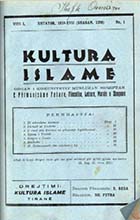
This paper presents a biographical study of Sulejman Kadiu (1883–1958), a Muslim cleric from Tirana who dedicated his life to religious service within the Albanian Muslim Community during the first half of the twentieth century. Born into a family of religious scholars, Kadiu began his career as a professor of Islamic history at the Medrese of Tirana before assuming increasingly significant institutional roles, including administrator (Mytevel’li) of the Waqf properties in Tirana and traveling preacher (vaiz) for the Muslim Community. The study traces his professional trajectory through archival documentation, including decrees, administrative records, and official correspondence, highlighting his integrity in managing waqf assets, his effectiveness as a preacher connecting religious teachings to contemporary social issues, and his contributions to religious education. Particular attention is given to his role during the difficult years of foreign occupation, when he chaired the commission overseeing the journal “Kultura Islame” and helped the Muslim Community navigate a period marked by anti-Islamic provocations while upholding both dignity and doctrinal integrity. The paper also documents his appointment to the Council of Ulema in 1942 and his later teaching position at the Medrese, where he taught Arabic until shortly before his death. Through this case study, the paper illuminates the broader institutional history of the Albanian Muslim Community in the interwar and wartime periods, as well as the personal qualities—sincerity, wisdom, and devotion—that characterized its religious leadership.
Keywords: Sulejman Kadiu, Albanian Muslim Community, Tirana, waqf administration, Islamic education, Medrese
- Book Review
A Monument of Light Unfading by Time: A Systematized Study of the Centennial History of the Albanian Muslim Community (1923–2023)
Book Review by Prof. Assoc. Dr. Rahim Ombashi
Abstract
This review examines Dorian Demetja’s monograph “100 Vjet Komuniteti Mysliman i Shqipërisë (1923–2023)”, a systematized historical account of the Albanian Muslim Community (KMSH) commissioned under the patronage of its Chairman, H. Bujar ef. Spahiu. The work traces KMSH’s institutional trajectory from its founding at the First Albanian Muslim Congress (1923), which declared the independence of the Albanian mosque from the Ottoman Caliphate and mandated the use of the Albanian language in religious practice and Quranic recitation, through subsequent congresses (1925, 1929) that reorganized Islamic education, notably through the establishment and consolidation of the “Medreseja e Përgjithshme” in Tirana. The review situates these developments within the broader context of Albanian national language standardization and state-building, drawing on sociolinguistic scholarship (Weinstein, Wardhaugh, Memushaj) to frame KMSH’s linguistic policies as part of a wider nation-building project. It further documents the community’s persecution under the Italian occupation and the communist regime—including property confiscation and the 1967 declaration of state atheism—and its revival following the reopening of the Plumbi Mosque in Shkodër in 1990. The reviewer, Prof. Asoc. Dr. Rahim Ombashi, praises the monograph’s rich archival apparatus and characterizes it as both a scholarly reference and a moral tribute to KMSH’s religious leadership across a century of institutional resilience.
Keywords: The Albanian Muslim Community (Komuniteti Mysliman Shqiptar, KMSH), Albanian Islamic history, Islamic education (medrese); Albanian language standardization, religious historiography, institutional continuity


Artikuj të ngjashëm

Me shumë në këtë kategori



Aktivitete



Studime


Gjuhë-letërsi



Sociologji


1923 – 1939

1939 – 1945
Zani i Naltë (40)